.png)


Feminist Organising in Northern Thailand: Building Collective Power in Chiang Mai for Thailand’s UPR IV!

Updated: Mar 9
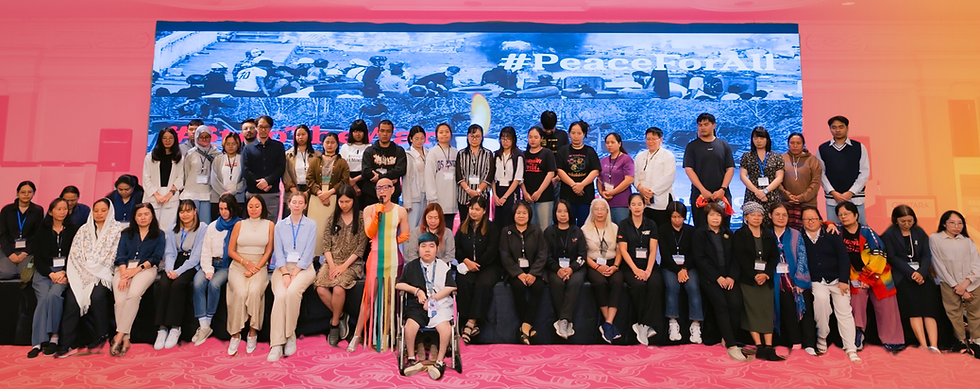
Manushya Foundation and Feminist Rights Groups Hold Northern Thailand Workshop Ahead of UN Human Rights Review
CHIANG MAI, THAILAND – On 15-16 December 2025, Manushya Foundation, in collaboration with Young Pride Foundation, the People’s Movement to Eliminate Discrimination (MovED), LBTQ Wellbeing, and the Thai CSOs Coalition for the UPR, successfully hosted the Northern Regional UPR IV Capacity & Movement-Building Workshop.
This event marked the third regional training in a nationwide series of four regional workshops taking place between October 2025 and January 2026. The series will bring together over 350 activists, youth leaders, and community representatives from every region of the country to strengthen their meaningful participation in Thailand’s upcoming Fourth Universal Period Review (UPR IV), and build a People-led UPR movement.
Thailand is scheduled to undergo its UPR IV review on 10 November 2026 at the UN Human Rights Council in Geneva. This incoming UPR is especially crucial as the country sees growing authoritarianism and transnational repression.

“I speak for human rights defenders, democracy activists, and LGBTQ people from Myanmar who were forced to flee after the 2021 military coup. Many of us came to Thailand seeking safety from arrest, torture, and detention. But instead of living in safety, many still live in fear of arrest, harassment, and forced return to Myanmar.”
–Naw Htoo Htoo, member of Sisters2Sisters Myanmar, a Burmese Feminist rights group
In preparation, Manushya Foundation and its partners work steadfastly to ensure that grassroots voices and marginalised communities are equipped with the knowledge, strategies, tools, and collective power to engage directly with UN human rights mechanisms.
The two-day workshop convened 114 courageous participants from across Northern Thailand, reflecting a wide range of lived experiences and advocacy backgrounds. Many participants identify across multiple communities and represent intersecting identities. The cohort included 60 women defenders, 20 members of the LGBTQIA+ community, 21 Indigenous Peoples, 4 persons with disabilities, and 12 migrant workers.
Shifting Power to the People

The workshop opened on 15 December with powerful remarks from Manuhya’s board members and representatives of our partner organisations, followed by an introduction to the UPR process facilitated by Emilie Palamy Pradichit, Founder & Executive Director of Manushya Foundation. Emilie highlighted the UPR’s role and significance in ensuring equality of voices on the international stage and reflected on how communities can leverage this UN mechanism to demand dignity, justice, and self-determination.

“The UPR is about shifting power. It’s no longer the elite and the INGOs controlling your work and your narrative. You’re owning the issues and you’re owning your own solutions.”
–Emilie Palamy Pradichit, Founder & Executive Director of Manushya Foundation
She was joined by Chitsanupong ‘Best’ Nithiwana, Founder & Executive Director of Young Pride Foundation, who enriched the discussions by sharing her own UPR experience and insights.

“We, the right holders, are the experts. We are the ones who build the foundation of our community to be able to express real stories and experiences into the UPR report.”
–Chitsanupong ‘Best’ Nithiwana, Founder & Executive Director of Young Pride Club
Speaking Truth to Power

On 16 December, participants took part in a technical session on how to draft UPR thematic submissions and lobby diplomats. They broke into 13 thematic groups to start working on their very own UPR Thematic Reports, namely:
Land-related rights and natural resources (including corporate impunity and unfair forest conservation policies)
SLAPPs faced by Environmental and Climate Defenders
Challenges faced by Indigenous Women
Rights of Indigenous Peoples
LGBTQIA+ Rights
Migrant Workers
Sex Workers
People Living With HIV
People Who Use Drugs
People Living With Disabilities
Elderly rights
Transnational Repression faced by Human Rights Defenders and Refugees from Myanmar

Guided by Manushya’s Lobbying Framework, each group identified their community’s key issues, drafted preliminary recommendations, and presented them to the rest of the participants.

"The Thai education system says it supports gender equality. But in reality, many schools and universities still discriminate against transgender and intersex people and violate their rights. We call for urgent laws to legally recognize gender identity, including a Gender Recognition Act. This is to confirm that Thailand should be a country that respects gender diversity.”
–Lin, LGBTQIA+ rights advocate from Rainbow Sky Association of Thailand, Young Pride Club, and Mermaid Pride Thailand
Care As A Movement-Building Strategy

As with the previous two regional workshops, wellbeing and self-care remained central throughout the two days thanks to the activities facilitated by LBT Wellbeing. This approach reinforced Manushya Foundation’s commitment to decolonial intersectional feminist movement-building: that self-care is not a luxury but an act of self-preservation; Activism, without wellbeing, care, and solidarity, cannot thrive.


Manushya Foundation is deeply grateful to our incredible partners Young Pride Foundation, MovED, LBTQ Wellbeing, and the Thai CSOs Coalition for the UPR, and to every participant who showed up with generous spirits and their communities’ advocacies at heart. For the next step in our People-led UPR journey, we look forward to gathering and sharing power with activists from Northeastern Thailand. Isaan, here we come!

“As Indigenous women, we are not asking for special treatment [to end violence against our people]. We are only asking for equal rights as human beings, so that we can live with dignity and improve our lives.”
–Ning, member of Indigenous Women's Association for Development (IWAD) formerly the Indigenous Women's Network of Thailand (IWNT)

Want to see more moments from the workshop?
Check out Manushya’s social media for more photos and highlights from each day!


